Fruit Enzyme for Juice Clarification: Juice Clarification Enzymes Specification Checklist
Compare fruit enzyme for juice clarification by activity, pH, dosage, QC, documentation, cost-in-use, and supplier qualification.
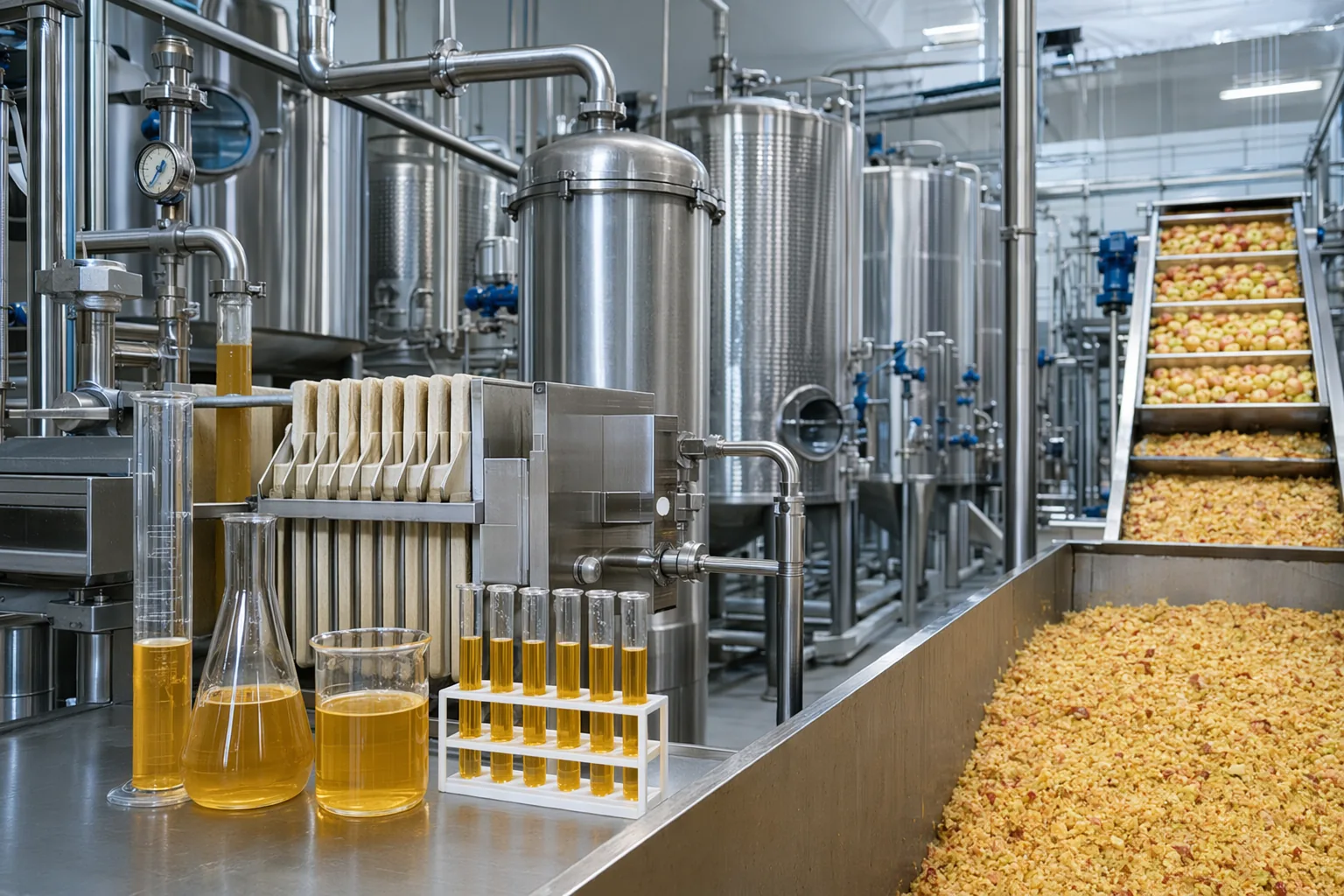
A practical B2B guide for juice, wine, and fruit processing buyers comparing industrial enzymes for clearer juice, better filtration, and validated plant performance.
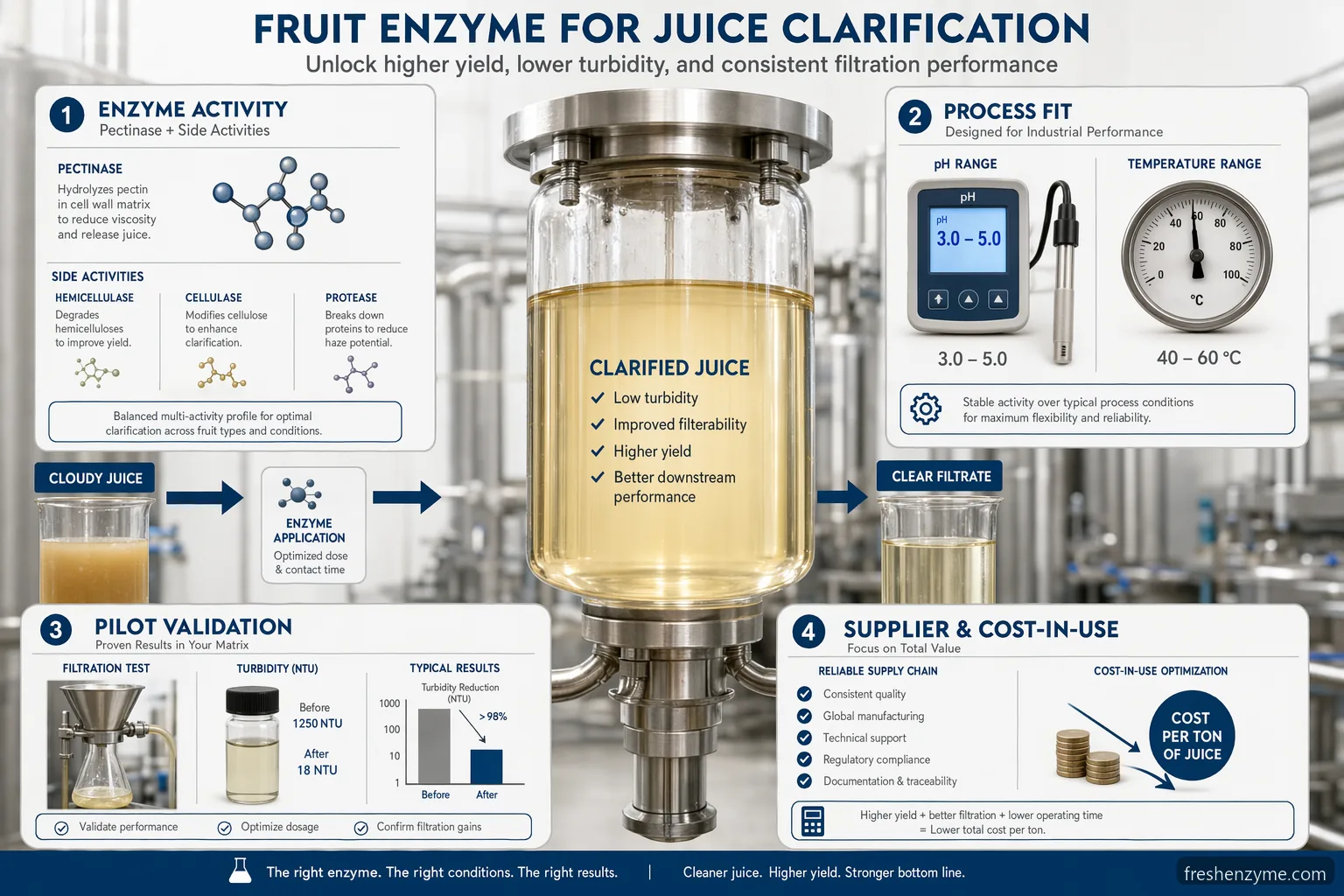
How to Compare Juice Clarification Enzymes
For industrial buyers, a fruit enzyme for juice clarification is not a generic processing aid. It should be compared against the fruit type, mash or juice stage, process temperature, holding time, downstream filtration equipment, and finished product targets. Apple, berry, grape, tropical fruit, and blended juices can differ significantly in pectin load, viscosity, suspended solids, and phenolic behavior. A juice clarification enzyme supplier for fruit processing should help define whether the process needs pectinase-dominant activity, a broader fruit enzyme blend, or a targeted enzyme used for clarification of fruit juices before filtration or concentration. The best comparison is based on measurable performance, not only quoted price per kilogram. Buyers should request specifications, application guidance, and pilot validation support before committing to plant-scale use.
Compare enzyme activity profile against your fruit matrix. • Check whether the product is suitable for juice, mash, wine, or puree handling. • Evaluate cost per treated ton, not only enzyme unit price. • Require application support for pilot and scale-up trials.
Activity Profile: Pectinase, Side Activities, and Fit
Pectinase juice applications are commonly used to break down pectic substances that keep fruit particles suspended and increase juice viscosity. Depending on the raw material, an industrial fruit enzyme juice clarification solution may include pectin lyase, polygalacturonase, pectin methylesterase, hemicellulase, cellulase, or arabinase side activities. These activities can improve clarification, press yield, depectinization, and filter flow, but excessive or poorly matched activity may affect texture, pulp stability, or sensory quality in some products. When comparing an industrial juice clarification enzyme fruit processing option, ask the supplier to identify the main activity units, recommended substrates, and any side activities relevant to your process. The enzyme should support the intended outcome: rapid clarification, improved separation, lower viscosity, better ultrafiltration throughput, or wine must treatment.
Pectinase-rich products are common for apple, grape, berry, and tropical juices. • Side activities may help with difficult pulp, mash, or high-viscosity fruit bases. • Clarify whether the enzyme is designed for clear juice, cloudy juice, wine, or puree processing. • Avoid over-processing products where pulp stability or mouthfeel must be retained.
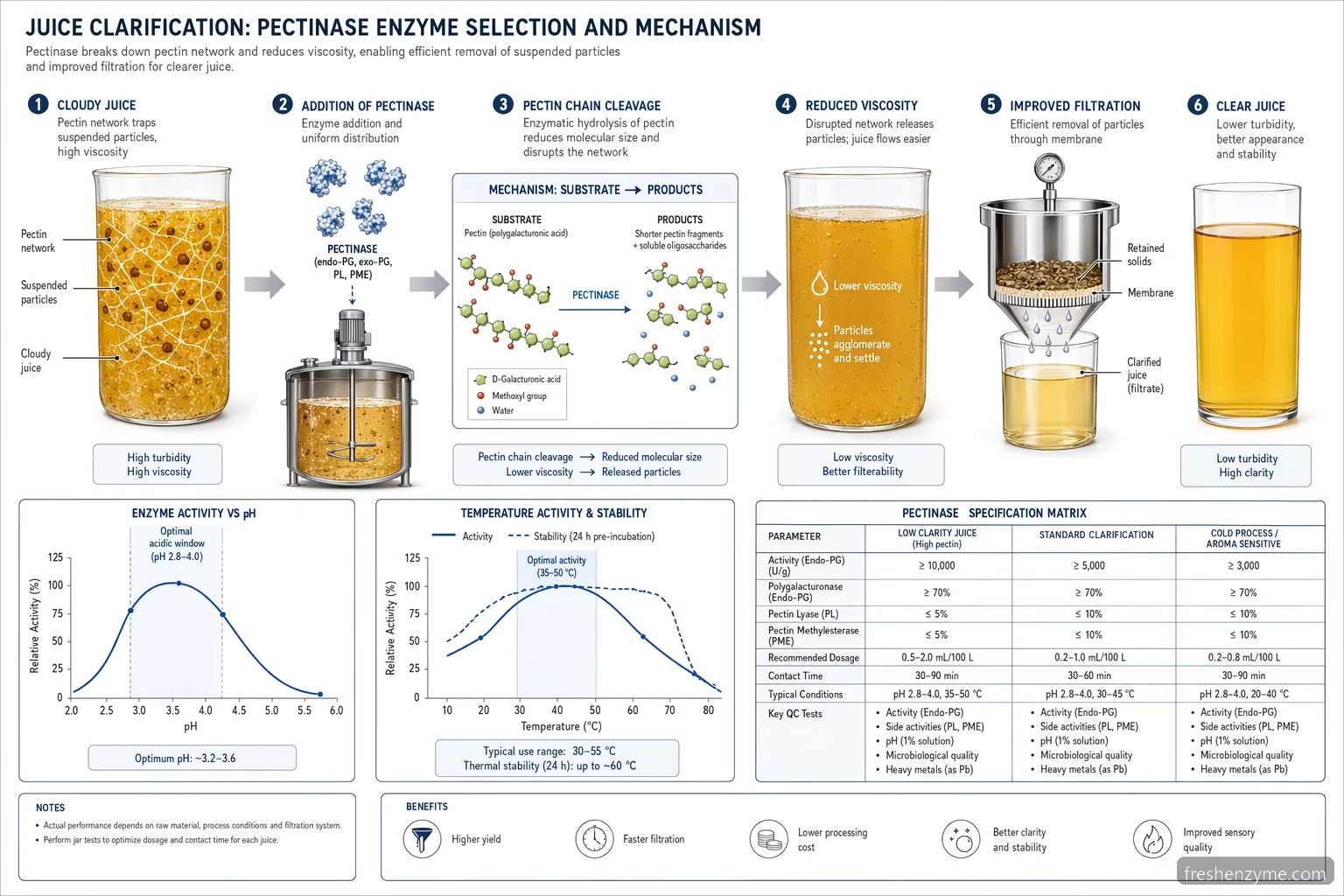
Process Conditions to Confirm Before Buying
A juice clarification enzyme for fruit processing should be matched to real plant conditions, not ideal laboratory conditions only. Many commercial pectinase-based systems operate effectively around pH 3.0–5.0 and 35–55°C, although supplier-specific recommendations can vary. Lower temperatures may require longer holding time or higher dosage, while excessive heat can reduce enzyme activity. Typical starting dosage bands for pilot screening may range from 20–200 g per metric ton of mash or juice, or a supplier-defined liquid equivalent, depending on activity strength, fruit type, contact time, and desired clarity. Holding times often range from 30 minutes to several hours. Always confirm whether the enzyme is added to crushed fruit, pressed juice, fermenting must, or clarified juice before filtration.
Confirm operating pH and temperature window from the TDS. • Screen at low, medium, and high dosage during pilot trials. • Record contact time, mixing quality, and solids level. • Verify heat inactivation requirements if the process needs enzyme deactivation. • Check compatibility with fining agents, filtration, pasteurization, or concentration.
Pilot Validation and Quality Control Checklist
Pilot validation is the safest way to compare fruit enzyme supplier for juice clarification options. Run side-by-side trials using the same fruit lot, grind size, solids content, dosage calculation, contact time, and temperature profile. Quality control should include turbidity or NTU, viscosity, soluble solids, pH, juice yield, filterability, centrifuge performance, haze after storage, color, aroma, and taste checks. For wine applications, include must clarification behavior and fermentation compatibility. A reliable juice clarification enzyme supplier for wine or fruit processing should provide a technical data sheet, certificate of analysis, safety data sheet, recommended storage conditions, shelf-life guidance, and sample support. Do not approve a product based only on visual clarity; validate downstream effects on filtration, membrane fouling, sediment volume, and finished product consistency.
Measure turbidity, viscosity, yield, and filter flow. • Run controls without enzyme and with benchmark dosage. • Check short-term and storage haze stability. • Review COA, TDS, and SDS for every commercial lot.
Supplier Qualification and Cost-in-Use
The right juice clarification enzyme supplier should be evaluated as a technical partner, not only a raw material vendor. Supplier qualification should cover manufacturing consistency, lot traceability, documentation quality, application expertise, complaint response, sample availability, lead time, packaging options, and storage stability. Ask for recent COA examples showing activity specification, appearance, batch number, manufacture or retest date, and relevant handling information. Cost-in-use should include enzyme dosage, treatment time, energy needs, filtration savings, yield improvement, waste reduction, rework reduction, and any impact on line capacity. A low-priced enzyme can be more expensive if it requires higher dosage, longer holding time, or causes inconsistent clarification. For procurement, compare total treated volume per package and expected performance under your actual process conditions.
Request supplier questionnaires if required by your quality system. • Compare cost per ton of fruit or per 1,000 liters of juice. • Assess technical support for troubleshooting and scale-up. • Confirm packaging, storage temperature, and shelf-life before ordering.
Technical Buying Checklist
Buyer Questions
Pectinase is the most common enzyme used for clarification of fruit juices because pectin contributes to viscosity, haze, and suspended solids stability. Many industrial products are pectinase-based blends with supporting side activities for specific fruit matrices. The best choice depends on fruit type, pH, temperature, contact time, filtration method, and whether the process targets clear juice, wine must, or easier pressing.
Compare products by activity profile, recommended pH and temperature range, dosage, contact time, documentation, and validated performance in your own juice. Run pilot trials with a no-enzyme control and at least two dosage levels. Measure turbidity, viscosity, filterability, yield, sediment, color, and sensory quality. Procurement should also compare cost-in-use, packaging, storage stability, technical support, and lead time.
Dosage depends on enzyme activity, fruit variety, pectin level, solids content, temperature, pH, and residence time. For pilot screening, some fruit processing plants evaluate a broad band such as 20–200 g per metric ton, or the supplier’s liquid equivalent. Final dosage should be confirmed by trial data, not assumed from another plant, because raw fruit conditions can change seasonally.
A qualified supplier should provide a technical data sheet, safety data sheet, and certificate of analysis for commercial lots. Buyers may also request storage instructions, shelf-life information, allergen or food-processing statements where applicable, and traceability details. The COA should align with the supplied lot and show key quality attributes such as activity specification, appearance, batch number, and release or retest date.
Some pectinase-based clarification enzymes are suitable for grape must or wine processing, but suitability should be confirmed with the supplier. Wine conditions, phenolics, alcohol formation, fermentation timing, and sensory requirements can differ from standard juice clarification. A juice clarification enzyme supplier for wine should provide application guidance and support bench trials that check clarification, lees volume, filtration behavior, aroma, and fermentation compatibility.
Related Search Themes
juice clarification enzyme supplier for fruit processing, juice clarification enzyme for fruit processing, industrial juice clarification enzyme fruit processing, industrial fruit enzyme juice clarification, fruit enzyme supplier for juice clarification, juice clarification enzyme
Juice Clarification Enzymes for Research & Industry
Need Juice Clarification Enzymes for your lab or production process?
ISO 9001 certified · Food-grade & research-grade · Ships to 80+ countries
Frequently Asked Questions
What is the main enzyme used for clarification of fruit juices?
Pectinase is the most common enzyme used for clarification of fruit juices because pectin contributes to viscosity, haze, and suspended solids stability. Many industrial products are pectinase-based blends with supporting side activities for specific fruit matrices. The best choice depends on fruit type, pH, temperature, contact time, filtration method, and whether the process targets clear juice, wine must, or easier pressing.
How should I compare an industrial fruit enzyme juice clarification product?
Compare products by activity profile, recommended pH and temperature range, dosage, contact time, documentation, and validated performance in your own juice. Run pilot trials with a no-enzyme control and at least two dosage levels. Measure turbidity, viscosity, filterability, yield, sediment, color, and sensory quality. Procurement should also compare cost-in-use, packaging, storage stability, technical support, and lead time.
What dosage should be used for a juice clarification enzyme?
Dosage depends on enzyme activity, fruit variety, pectin level, solids content, temperature, pH, and residence time. For pilot screening, some fruit processing plants evaluate a broad band such as 20–200 g per metric ton, or the supplier’s liquid equivalent. Final dosage should be confirmed by trial data, not assumed from another plant, because raw fruit conditions can change seasonally.
What documents should a juice clarification enzyme supplier provide?
A qualified supplier should provide a technical data sheet, safety data sheet, and certificate of analysis for commercial lots. Buyers may also request storage instructions, shelf-life information, allergen or food-processing statements where applicable, and traceability details. The COA should align with the supplied lot and show key quality attributes such as activity specification, appearance, batch number, and release or retest date.
Can the same juice clarification enzyme be used for wine?
Some pectinase-based clarification enzymes are suitable for grape must or wine processing, but suitability should be confirmed with the supplier. Wine conditions, phenolics, alcohol formation, fermentation timing, and sensory requirements can differ from standard juice clarification. A juice clarification enzyme supplier for wine should provide application guidance and support bench trials that check clarification, lees volume, filtration behavior, aroma, and fermentation compatibility.
Related: Clearer Fruit Juices with Faster Separation
Turn This Guide Into a Supplier Brief Request a sample, TDS, SDS, COA, and pilot dosage guidance for your juice or wine process. See our application page for Clearer Fruit Juices with Faster Separation at /applications/fruit-juice-clarification/ for specs, MOQ, and a free 50 g sample.
Contact Us to Contribute