Bulk Enzyme Supply for Fruit Processors: Specification and Quote Checklist
For fruit processors, cideries, wineries and distributors buying processing enzymes in bulk. How to specify them, compare suppliers and request a quote.
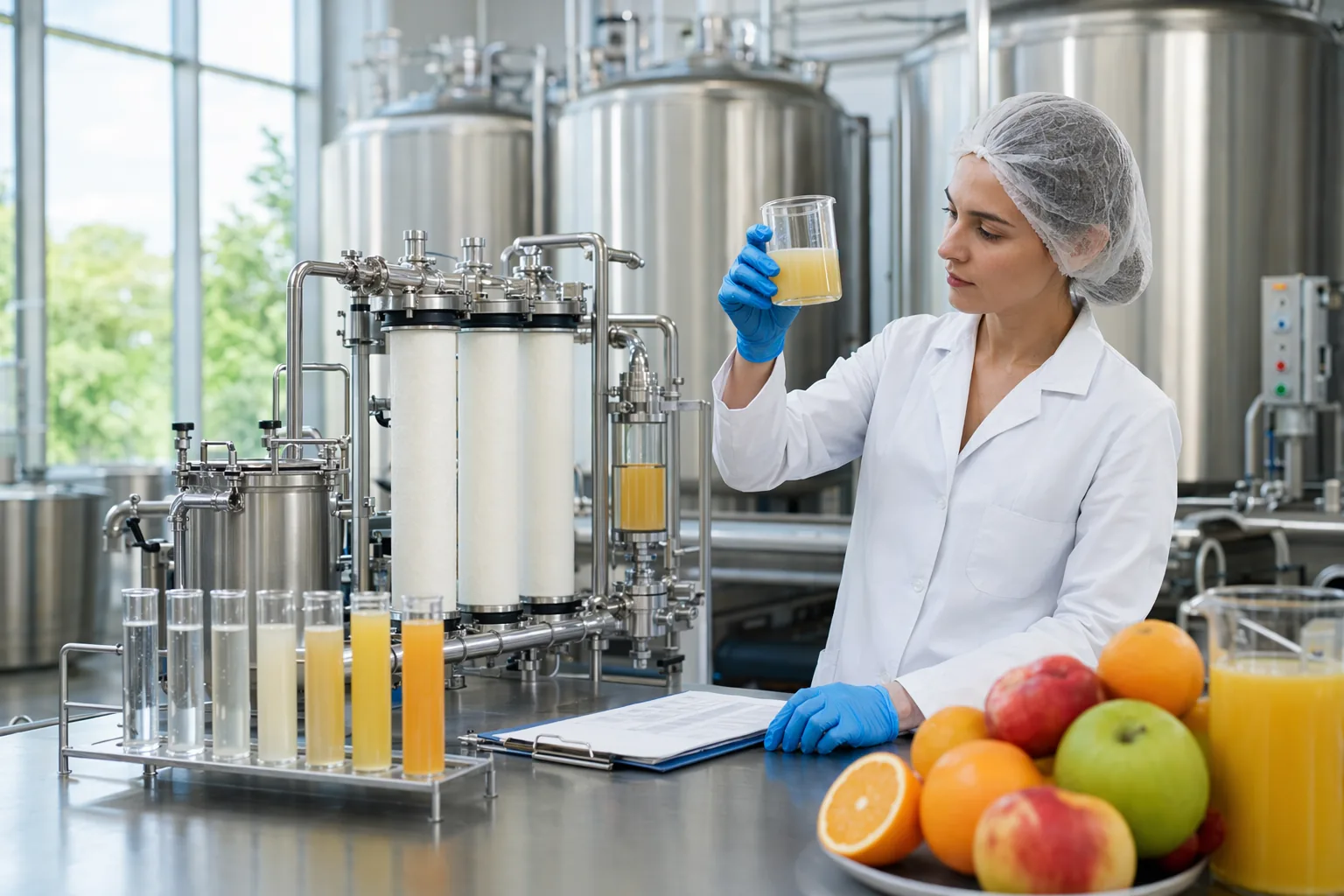
This guide is for businesses that buy processing enzymes in bulk for fruit lines: juice and concentrate processors, cideries, wineries, fruit ingredient manufacturers and the distributors who supply them. It covers how to write a specification for a pectin-degrading enzyme, how to compare suppliers on cost-in-use rather than price per kilogram, and what to review before a first order.
To request a quote, send the product (liquid or powder), the quantity, the destination and your process step to hello@mail.freshenzyme.com or through the inquiry form. Packs are 25 kg drums, 200 L barrels or custom packaging; the minimum order is 25 kg; pricing and freight are quoted per order.
Why Processors Use Juice Clarification Enzymes
A juice clarification enzyme is typically a pectinase-rich preparation designed to break down soluble and insoluble pectins that hold pulp particles in suspension. In industrial juice clarification, this can improve settling, centrifugation, flotation, and filtration performance. For apple, berry, grape, tropical fruit, and blended juices, pectin structure varies by cultivar, maturity, pressing method, and heat history, so enzyme choice should be validated under real plant conditions. Buyers often evaluate juice processing enzyme options to reduce haze, improve throughput, support consistent turbidity, and lower filter aid consumption. In wine and fruit processing, the same decision logic applies: match activity profile to raw material and production objective. The best commercial result is not simply the lowest price per kilogram, but the lowest validated cost-in-use with dependable batch-to-batch performance.
Supports clarification, depectinization, and filtration efficiency • Commonly used in juice, wine, cider, puree, and fruit extract lines • Should be selected by application data, not generic activity claims
How to Compare Juice Clarification Enzyme Suppliers
A reliable supplier should help you compare products by performance in your process, not only by quoted price per kilogram. Industrial buyers usually need pectinase-based blends that break down soluble pectin, reduce viscosity, release bound juice, and improve settling or filtration. The right supplier will ask about fruit type, mash or pressed juice treatment, Brix, pH, temperature, residence time, pasteurization stage, and filtration equipment. For apple, berry, tropical fruit, and grape systems, the enzyme profile may need different pectin methylesterase, polygalacturonase, pectin lyase, cellulase, or hemicellulase balance. Supplier comparison should include technical fit, documentation, lot consistency, and realistic pilot validation. A strong supplier can explain expected benefits, limitations, and handling requirements without making unverifiable claims.
Define your target: lower turbidity, faster filtration, higher yield, or improved concentrate handling. • Compare activity units and recommended dosage on an equal process basis. • Ask whether the product is designed for juice, wine, fruit puree, or mixed applications.
Activity Profile: Pectinase, Side Activities, and Fit
Pectinase preparations are commonly used to break down pectic substances that keep fruit particles suspended and increase juice viscosity. Depending on the raw material, a clarification enzyme may include pectin lyase, polygalacturonase, pectin methylesterase, hemicellulase, cellulase, or arabinase side activities. These activities can improve clarification, press yield, depectinization, and filter flow, but excessive or poorly matched activity may affect texture, pulp stability, or sensory quality in some products. When comparing options, ask the supplier to identify the main activity units, recommended substrates, and any side activities relevant to your process. The enzyme should support the intended outcome: rapid clarification, improved separation, lower viscosity, better ultrafiltration throughput, or wine must treatment.
Pectinase-rich products are common for apple, grape, berry, and tropical juices. • Side activities may help with difficult pulp, mash, or high-viscosity fruit bases. • Clarify whether the enzyme is designed for clear juice, cloudy juice, wine, or puree processing. • Avoid over-processing products where pulp stability or mouthfeel must be retained.
Recommended Process Conditions for Pilot Trials
Pilot validation should define a practical operating window before any full-scale purchase commitment. Our juice clarification enzyme is specified for pH 3.5–5.5 and 40–55 °C; warmer conditions within that window speed the reaction, while cooler cellar processes need longer contact time. Start from the dosage on the supplier's TDS for the exact lot, then optimize against turbidity, viscosity, filtration rate and sensory requirements. Contact time is set in the same trial. Heat inactivation, if required, should be verified because plant pasteurization conditions differ. Always test the exact substrate, process sequence, holding tank geometry, and downstream filtration method used in production.
Screen pH, temperature, dosage, and contact time together • Measure pectin break, viscosity, turbidity, and filtration rate • Confirm compatibility with preservatives, fining aids, and process heat
How to Specify a Juice Clarification Enzyme
When requesting quotations, define the fruit substrate, process stage, annual volume, target turbidity, temperature profile, pH, holding time, and filtration system. A supplier should be able to explain whether the product is optimized for pressed juice, crushed mash, wine must, concentrate production, or fruit processing streams with high pulp load. Ask for the activity type, recommended dosage range, carrier or diluent information where relevant, storage conditions, shelf life, and allergen or regulatory statements applicable to your market. Bulk projects also need packaging formats that fit plant handling, such as drums, jerrycans, or cartons. The specification should connect technical performance with procurement needs: minimum order quantity, lead time, batch documentation, and repeatability across deliveries.
State fruit type, Brix, pH, temperature, and process step • Request COA, TDS, SDS, and sample availability • Clarify storage temperature, shelf life, and packaging options
Quality Control Checks for Clarification Performance
A reliable QC plan helps compare fruit enzyme options and prevents purchasing decisions based only on supplier claims. For juice clarification, common checks include pectin test results, viscosity reduction, turbidity in NTU, centrifuge sediment volume, filterability index, juice yield, color change, and final haze stability after storage. Wine applications may also monitor clarification speed, lees compaction, aroma impact, and compatibility with fining agents. Fruit processing plants should track lot-to-lot raw material variation because enzyme demand can change significantly during the season. Keep untreated controls and run side-by-side enzyme dosages under identical mixing and temperature conditions. A buyer evaluating a juice clarification enzyme supplier for wine or juice should request batch COA data and compare it with in-house application results rather than relying on activity units alone.
Use untreated control samples in every pilot test • Track NTU, viscosity, filtration time, yield, and haze stability • Compare supplier COA data with plant performance results
Supplier Qualification and Documentation
For B2B procurement, supplier qualification should cover both technical capability and commercial reliability. At minimum, request a Certificate of Analysis for each batch, a Technical Data Sheet with dosage and handling guidance, and a Safety Data Sheet for warehouse and plant safety review. Confirm batch traceability, production origin, shelf-life policy, recommended storage, sample process, and response time for technical questions. A juice clarification enzyme supplier for fruit processing should also support pilot design and troubleshooting when raw material quality changes. Avoid overvaluing broad marketing claims; instead, ask for application data relevant to your fruit, equipment, and quality target. If your plant has customer-specific requirements, review documentation before purchase. Qualification is strongest when procurement, QA, R&D, production, and EHS all approve the same product profile.
Require COA, TDS, SDS, and batch traceability • Evaluate technical support and sample responsiveness • Confirm documentation against your market and customer requirements
Cost-in-Use: Beyond Price per Kilogram
The lowest quoted price is not always the best value for an industrial juice clarification enzyme. Cost-in-use should include dosage, activity consistency, clarification time, yield improvement, filtration throughput, filter aid consumption, labor, energy, cleaning frequency, and rework reduction. A more concentrated or better-matched pectinase juice product may cost more per kilogram but use a lower dose or shorten tank residence time. Conversely, an inexpensive product may increase variability if it requires higher dosing or fails during high-pectin fruit periods. Build a comparison model from pilot results using your actual production volumes and bottlenecks. For wine, juice clarification, and fruit processing, the strongest procurement decision combines verified technical performance, dependable supply, proper documentation, and a cost comparison per metric ton of processed fruit or juice.
Calculate cost per metric ton, not only unit price • Include filtration speed, yield, downtime, and rework • Use pilot data to support purchase specifications
How We Support Bulk Buyers and Distributors
Fresh Enzyme helps processors, distributors and resellers evaluate a juice clarification enzyme with a practical, procurement-ready approach. Our team can discuss fruit type, process flow, target clarity, available holding time, operating pH and temperature, and downstream equipment before recommending a trial plan. We support buyers who need clear technical information for purchasing and plant validation. Pilot validation is encouraged before commercial adoption, especially for high-pectin fruit, seasonal raw material variation, or membrane-based clarification. We can provide product documentation for review and help structure a comparison against current processing conditions so your team can make a data-based supplier decision.
Application discussion before product selection • Pilot trial planning for juice, wine, and fruit processing lines • Documentation support for QA and purchasing teams • Focus on repeatable results and practical plant implementation
What to Send With a Quote Request
A quote request that contains the following gets a usable answer in one reply instead of several rounds of questions. Distributors and resellers can send the same details for their end customer's application.
Product form: liquid or powder, and the activity range you work with. • Quantity: first order and expected monthly or annual volume. • Destination: country and port or delivery city, so freight can be quoted. • Process: fruit or must, treatment point (mash, juice or must), temperature, pH and holding time. • Documents your QA team needs to review before approval. • Pack preference: 25 kg drums, 200 L barrels or custom.
Buyer Questions
A juice clarification enzyme is an industrial processing aid, often based on pectinase activity, used to break down pectins that keep pulp and colloids suspended. It helps processors improve settling, centrifugation, flotation, or filtration. It is used in juice, wine, and fruit processing applications, and should be selected through pilot testing with the actual fruit substrate and plant process conditions.
The correct dose depends on fruit type, pectin level, pH, temperature, contact time, and equipment. Use the supplier TDS as the starting reference, then optimize with treated and untreated controls while measuring turbidity, viscosity, filtration rate, and cost-in-use.
Some products can be suitable for both wine and juice clarification, but validation is still necessary. Wine must, grape juice, apple juice, berry juice, and tropical fruit streams differ in pectin structure, phenolics, solids, and sensory requirements. A juice clarification enzyme supplier for wine should provide application guidance and documentation, but plant trials should confirm clarity, filtration, yield, and sensory impact.
A qualified supplier should provide a Certificate of Analysis for batch-specific quality, a Technical Data Sheet with use conditions and storage guidance, and a Safety Data Sheet for handling review. Buyers may also request traceability information, shelf-life policy, regulatory statements relevant to the destination market, packaging details, sample availability, and technical support for pilot validation.
Compare suppliers by validated performance, documentation quality, batch consistency, lead time, packaging fit, technical support, and total cost-in-use. Run side-by-side pilot trials using the same fruit, pH, temperature, dosage range, and contact time. Measure NTU, viscosity, filtration rate, yield, haze stability, and process time, then calculate cost per metric ton rather than relying only on price per kilogram.
Juice Clarification Enzymes for Research & Industry
Need Juice Clarification Enzymes for your lab or production process?
ISO 9001 certified · Food-grade & research-grade · Ships to 80+ countries
Frequently Asked Questions
What is a juice clarification enzyme?
A juice clarification enzyme is an industrial processing aid, often based on pectinase activity, used to break down pectins that keep pulp and colloids suspended. It helps processors improve settling, centrifugation, flotation, or filtration. It is used in juice, wine, and fruit processing applications, and should be selected through pilot testing with the actual fruit substrate and plant process conditions.
What dosage should I use for pectinase juice clarification?
The correct dose depends on fruit type, pectin level, pH, temperature, contact time, and equipment. Use the supplier TDS as the starting reference, then optimize with treated and untreated controls while measuring turbidity, viscosity, filtration rate, and cost-in-use.
Can the same enzyme be used for wine and juice clarification?
Some products can be suitable for both wine and juice clarification, but validation is still necessary. Wine must, grape juice, apple juice, berry juice, and tropical fruit streams differ in pectin structure, phenolics, solids, and sensory requirements. A juice clarification enzyme supplier for wine should provide application guidance and documentation, but plant trials should confirm clarity, filtration, yield, and sensory impact.
What documents should an industrial enzyme supplier provide?
A qualified supplier should provide a Certificate of Analysis for batch-specific quality, a Technical Data Sheet with use conditions and storage guidance, and a Safety Data Sheet for handling review. Buyers may also request traceability information, shelf-life policy, regulatory statements relevant to the destination market, packaging details, sample availability, and technical support for pilot validation.
How do I compare juice clarification enzyme suppliers?
Compare suppliers by validated performance, documentation quality, batch consistency, lead time, packaging fit, technical support, and total cost-in-use. Run side-by-side pilot trials using the same fruit, pH, temperature, dosage range, and contact time. Measure NTU, viscosity, filtration rate, yield, haze stability, and process time, then calculate cost per metric ton rather than relying only on price per kilogram.
Related: Clearer Fruit Juices with Faster Separation
Turn This Guide Into a Supplier Brief Request a technical consultation and pilot sample for your juice clarification process. See our application page for Clearer Fruit Juices with Faster Separation at /applications/fruit-juice-clarification/ for specs, MOQ, and a free 50 g sample.
Contact Us to Contributehello@mail.freshenzyme.com