Industrial Juice Clarification Enzyme Juice Clarification Formulation Guide
Select and dose juice clarification enzyme for fruit juice, wine, and fruit processing with pH, temperature, QC, COA/TDS/SDS, and pilot guidance.
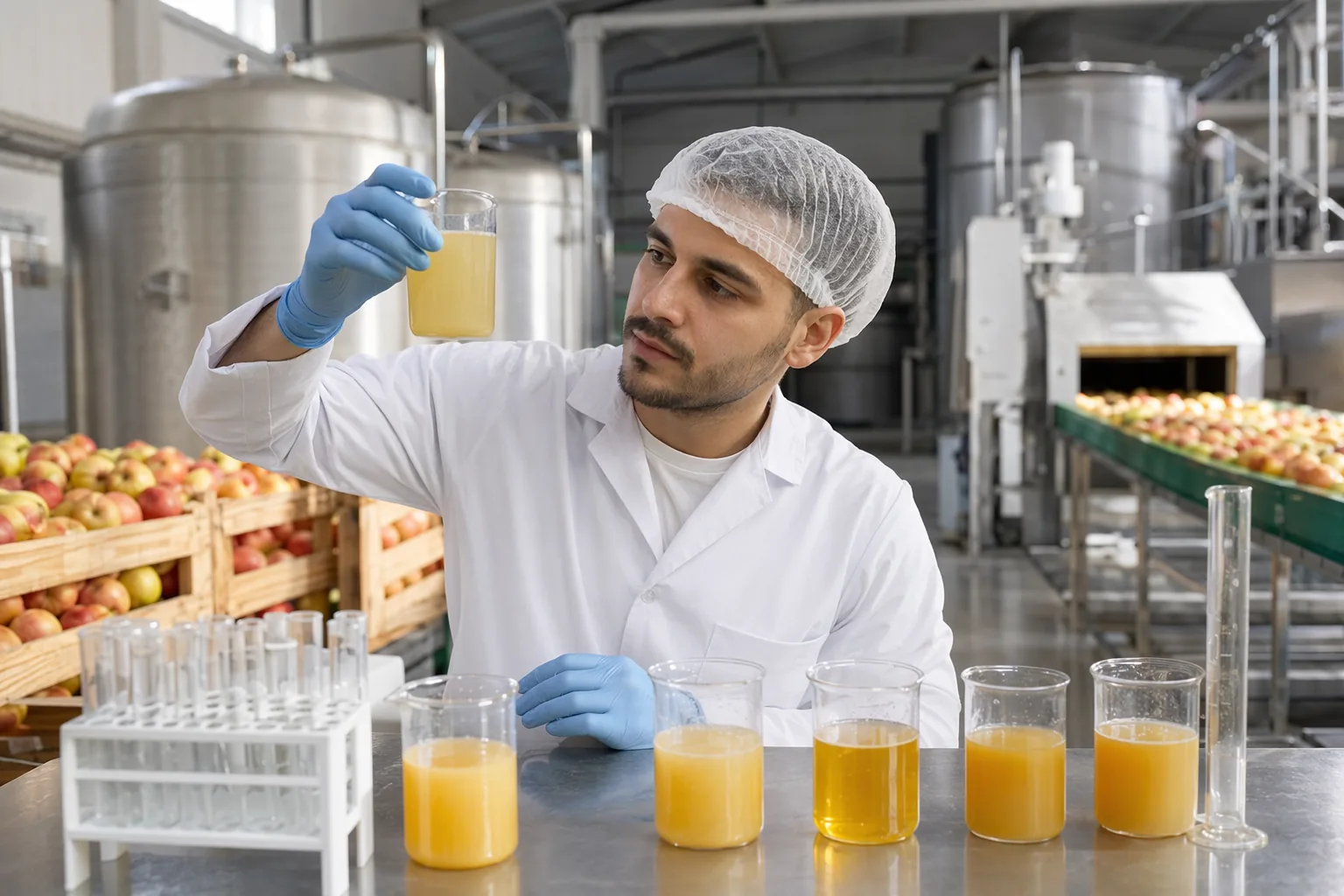
For juice processors, wineries, and fruit ingredient manufacturers, the right pectinase-based juice clarification enzyme can improve clarification, filtration, and yield when validated under real process conditions.
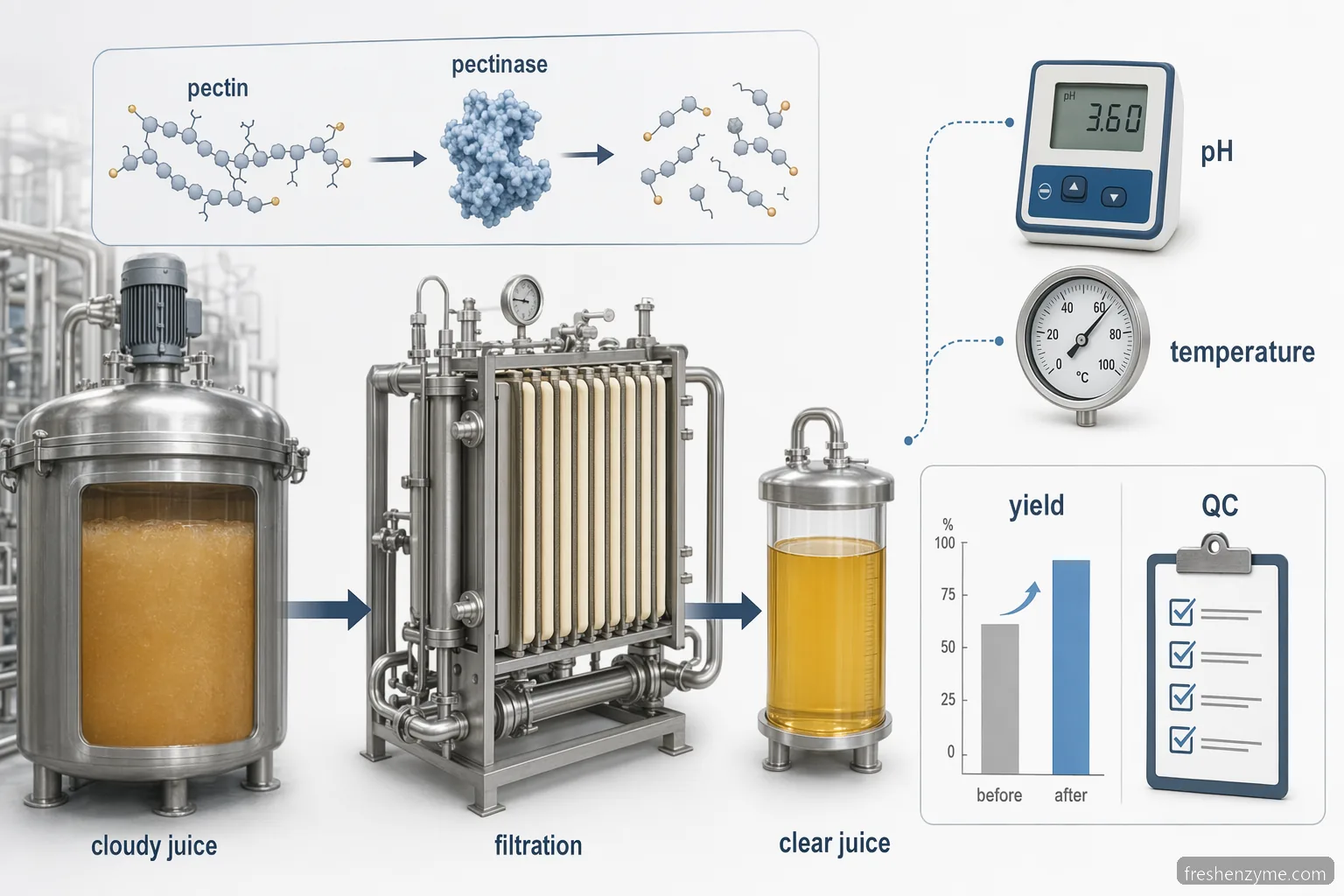
What an Industrial Juice Clarification Enzyme Does
An industrial juice clarification enzyme juice clarification program typically uses pectinase activity, sometimes supported by hemicellulase or cellulase side activities, to break down soluble and insoluble pectin that keeps fruit juice hazy and viscous. In apple, berry, grape, tropical fruit, and mixed fruit processing, pectin can slow press extraction, reduce filterability, and create unstable haze after bottling. A well-selected juice clarification enzyme reduces pectin structure so suspended particles can aggregate, settle, centrifuge, or filter more efficiently. For wine, the same concept supports must clarification, juice settling, and improved pressing, while preserving the sensory profile through controlled dosage and contact time. Enzyme selection should be based on the raw material, target clarity, process sequence, heat treatment, and whether the plant uses decanters, flotation, membrane filtration, plate filters, or kieselguhr systems.
Primary function: pectin breakdown for lower viscosity and better clarification. • Common users: juice plants, wineries, fruit puree processors, and concentrate manufacturers. • Main buying need: consistent activity, predictable performance, and documented technical support.
Recommended Process Conditions for Juice Clarification
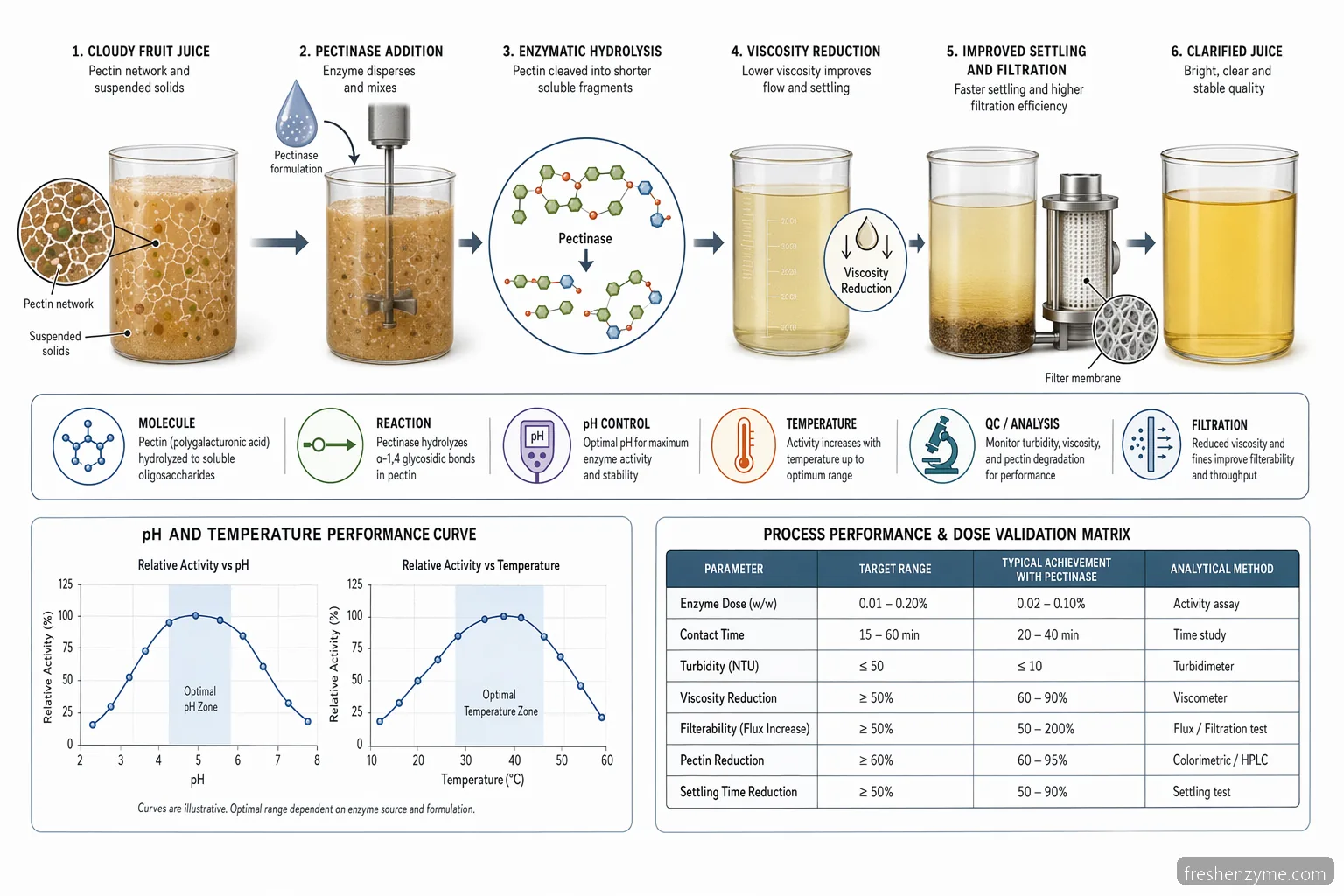
Most pectinase juice clarification systems perform well in acidic fruit matrices, often around pH 3.0-5.0. Many industrial products show useful activity from 35-55°C, with faster clarification near the upper end if the fruit quality and process design allow heating. Cold wine and premium juice operations may run at 10-25°C with a longer holding time. Dosage is commonly validated in the range of 20-150 g or mL per metric ton of juice or mash, depending on enzyme activity, fruit pectin level, turbidity, and desired residence time. Contact times often range from 30-120 minutes for heated juice treatment and several hours for colder wine or must clarification. These are starting points, not universal rules. Final settings should be confirmed by bench trials, pilot production, and comparison against the plant’s filtration and clarity targets.
Typical pH range: 3.0-5.0 for many fruit systems. • Typical temperature range: 35-55°C for faster juice clarification. • Typical dose band: 20-150 g or mL per metric ton, product dependent. • Typical contact time: 30-120 minutes when heat and mixing are available.
Formulation and Application Points for Fruit Processing
For industrial fruit enzyme juice clarification, the enzyme can be added to crushed fruit mash, pressed juice, must, or intermediate juice before filtration. Mash treatment may improve juice release and pressing efficiency, while juice treatment is often used to reduce haze and improve final filtration. In fruit processing, formulation teams should consider pulp content, soluble solids, native polyphenols, calcium level, and the amount of heat already applied to the fruit. Overprocessing can be wasteful, while underdosing may leave residual pectin that blocks membranes or causes haze failures. A juice clarification enzyme supplier for fruit processing should provide guidance on dilution, dosing pumps, mixing time, and compatibility with preservatives, fining aids, or filtration aids. If enzymes are used before thermal pasteurization or concentration, the heat step may also serve as an inactivation point, subject to product-specific validation.
Add before the bottleneck step: pressing, settling, flotation, centrifugation, or filtration. • Confirm compatibility with fining agents, preservatives, and heat treatments. • Use plant trials to balance clarity, yield, throughput, and sensory requirements.
Wine and Premium Juice Considerations
When selecting an industrial juice clarification enzyme wine application, processors should pay attention to temperature, contact time, varietal character, and the desired level of clarification before fermentation or stabilization. A juice clarification enzyme for wine is commonly used for grape must settling, press fraction handling, and clarification of difficult juices. Cooler cellar temperatures slow enzyme action, so lower-temperature processes usually need a longer contact time or a product designed for cold performance. For premium juice and wine, aggressive treatment is not always desirable; the best result is usually the minimum validated dose that achieves filterability and turbidity goals without unnecessary processing. A juice clarification enzyme supplier for wine should support small-scale trials across grape varieties, harvest conditions, and turbidity targets, especially when pectin content varies because of maturity, mechanical harvesting, or skin contact.
Cool processes may require longer contact times. • Validate dose by varietal, harvest condition, and clarification target. • Use sensory checks alongside turbidity and filterability tests.
QC Checks, Documentation, and Supplier Qualification
B2B buyers should qualify a juice clarification enzyme supplier for juice clarification with both technical and quality documentation. Request the current TDS for activity description, recommended conditions, storage, shelf life, and dosing guidance. The COA should identify lot number, activity or specification results, appearance, and release criteria. The SDS should cover safe handling, dust or aerosol precautions, storage, and spill response. For plant validation, track pH, temperature, dose, contact time, turbidity, viscosity, pectin test result, filterability index, juice yield, Brix, color, and sensory observations. Cost-in-use should include enzyme cost per ton, holding tank time, filtration rate, filter aid use, membrane cleaning frequency, yield gain, and rejected batch reduction. Supplier qualification should also review traceability, batch consistency, lead time, technical service response, and suitability for the intended food or beverage market.
Request COA, TDS, SDS, activity method, and lot traceability. • Run bench, pilot, and production validation before full conversion. • Evaluate total cost-in-use, not only quoted enzyme price.
Technical Buying Checklist
Buyer Questions
Start with fruit type, pectin level, process pH, temperature, contact time, and the clarification equipment used. Apple, grape, berry, and tropical fruit matrices may respond differently to the same pectinase juice product. Ask the supplier for TDS guidance, then run bench trials at two or three dosages. Confirm turbidity, pectin test result, filterability, yield, and sensory impact before moving to pilot scale.
A practical screening range is often 20-150 g or mL per metric ton, but the correct dose depends on enzyme activity, fruit pectin load, temperature, holding time, and clarity target. Begin with the supplier’s TDS recommendation and test a low, medium, and high dose under plant-like conditions. Select the lowest dose that consistently meets filtration, turbidity, and yield requirements.
Some juice clarification enzyme products are suitable for both wine and fruit juice, but validation is essential. Wine applications may run at lower temperatures and require longer contact times, with more attention to varietal character and sensory balance. Ask for application guidance specific to wine must, grape juice, or press fractions. Confirm local food and beverage suitability through supplier documentation before commercial use.
Request a COA for each lot, a TDS with activity and application guidance, and an SDS for safe handling. Also ask for storage conditions, shelf life, traceability details, activity method summary, and regulatory suitability for the intended market. For supplier qualification, review batch consistency, lead time, technical support, change notification practices, and the ability to support pilot validation.
Related Search Themes
industrial juice clarification enzyme wine, industrial juice clarification enzyme fruit processing, industrial fruit enzyme juice clarification, juice clarification enzyme, juice clarification enzyme supplier for wine, juice clarification enzyme supplier for juice clarification
Juice Clarification Enzymes for Research & Industry
Need Juice Clarification Enzymes for your lab or production process?
ISO 9001 certified · Food-grade & research-grade · Ships to 80+ countries
Frequently Asked Questions
How do I choose the right juice clarification enzyme for my process?
Start with fruit type, pectin level, process pH, temperature, contact time, and the clarification equipment used. Apple, grape, berry, and tropical fruit matrices may respond differently to the same pectinase juice product. Ask the supplier for TDS guidance, then run bench trials at two or three dosages. Confirm turbidity, pectin test result, filterability, yield, and sensory impact before moving to pilot scale.
What dosage should we use for industrial juice clarification?
A practical screening range is often 20-150 g or mL per metric ton, but the correct dose depends on enzyme activity, fruit pectin load, temperature, holding time, and clarity target. Begin with the supplier’s TDS recommendation and test a low, medium, and high dose under plant-like conditions. Select the lowest dose that consistently meets filtration, turbidity, and yield requirements.
Can the same enzyme be used for wine and juice clarification?
Some juice clarification enzyme products are suitable for both wine and fruit juice, but validation is essential. Wine applications may run at lower temperatures and require longer contact times, with more attention to varietal character and sensory balance. Ask for application guidance specific to wine must, grape juice, or press fractions. Confirm local food and beverage suitability through supplier documentation before commercial use.
What documents should a B2B buyer request from a supplier?
Request a COA for each lot, a TDS with activity and application guidance, and an SDS for safe handling. Also ask for storage conditions, shelf life, traceability details, activity method summary, and regulatory suitability for the intended market. For supplier qualification, review batch consistency, lead time, technical support, change notification practices, and the ability to support pilot validation.
Related: Clearer Fruit Juices with Faster Separation
Turn This Guide Into a Supplier Brief Request a juice clarification enzyme sample, TDS, COA, and pilot trial guidance for your fruit or wine process. See our application page for Clearer Fruit Juices with Faster Separation at /applications/fruit-juice-clarification/ for specs, MOQ, and a free 50 g sample.
Contact Us to Contribute