Industrial Fruit Enzyme Juice Clarification: Dosage, pH, and Temperature
Troubleshoot juice clarification with industrial fruit enzyme guidance on pH, temperature, dosage, QC checks, pilot trials, and supplier qualification.
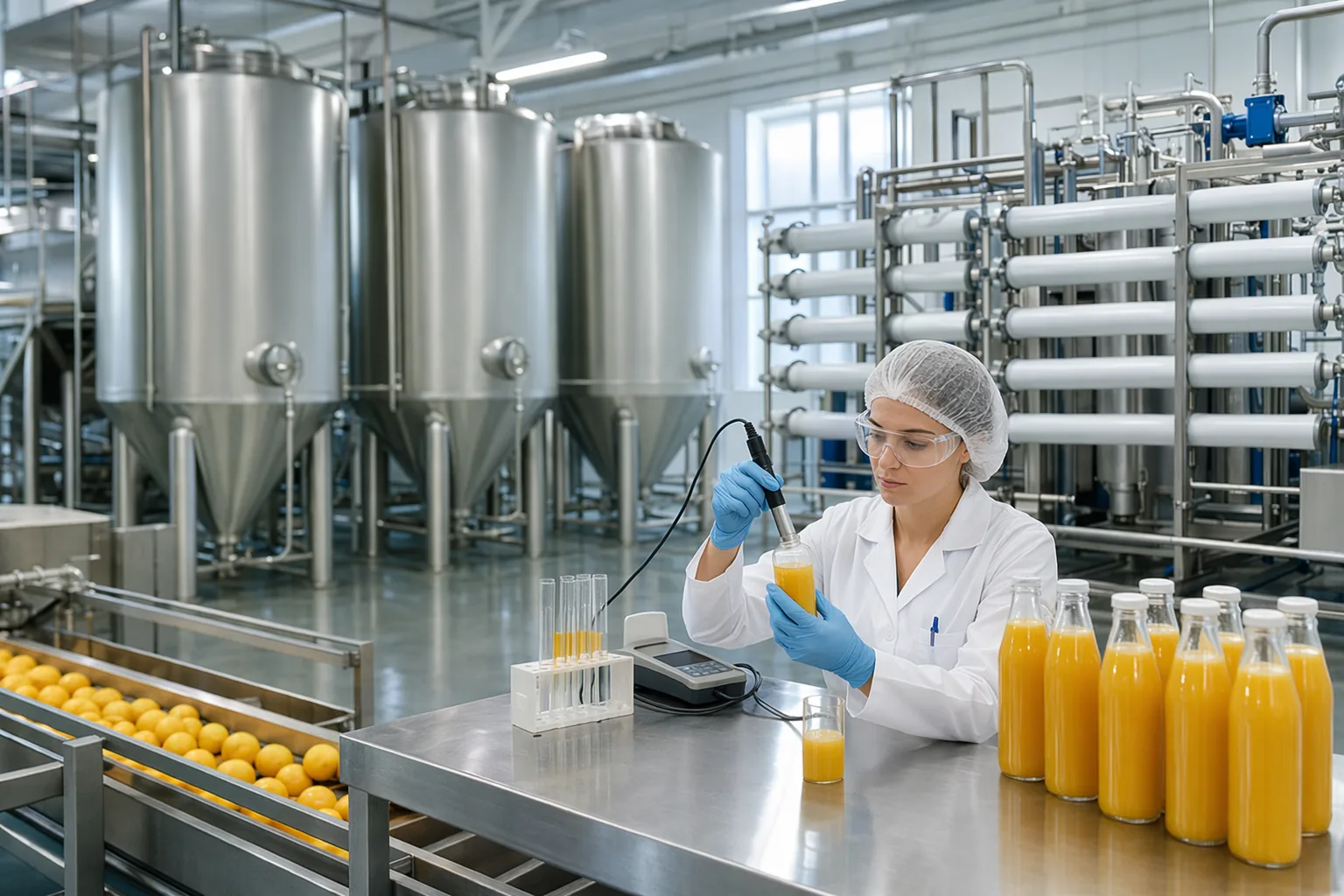
Improve juice clarity, filtration rate, and process consistency with practical guidance for selecting and validating juice clarification enzymes in fruit processing plants.
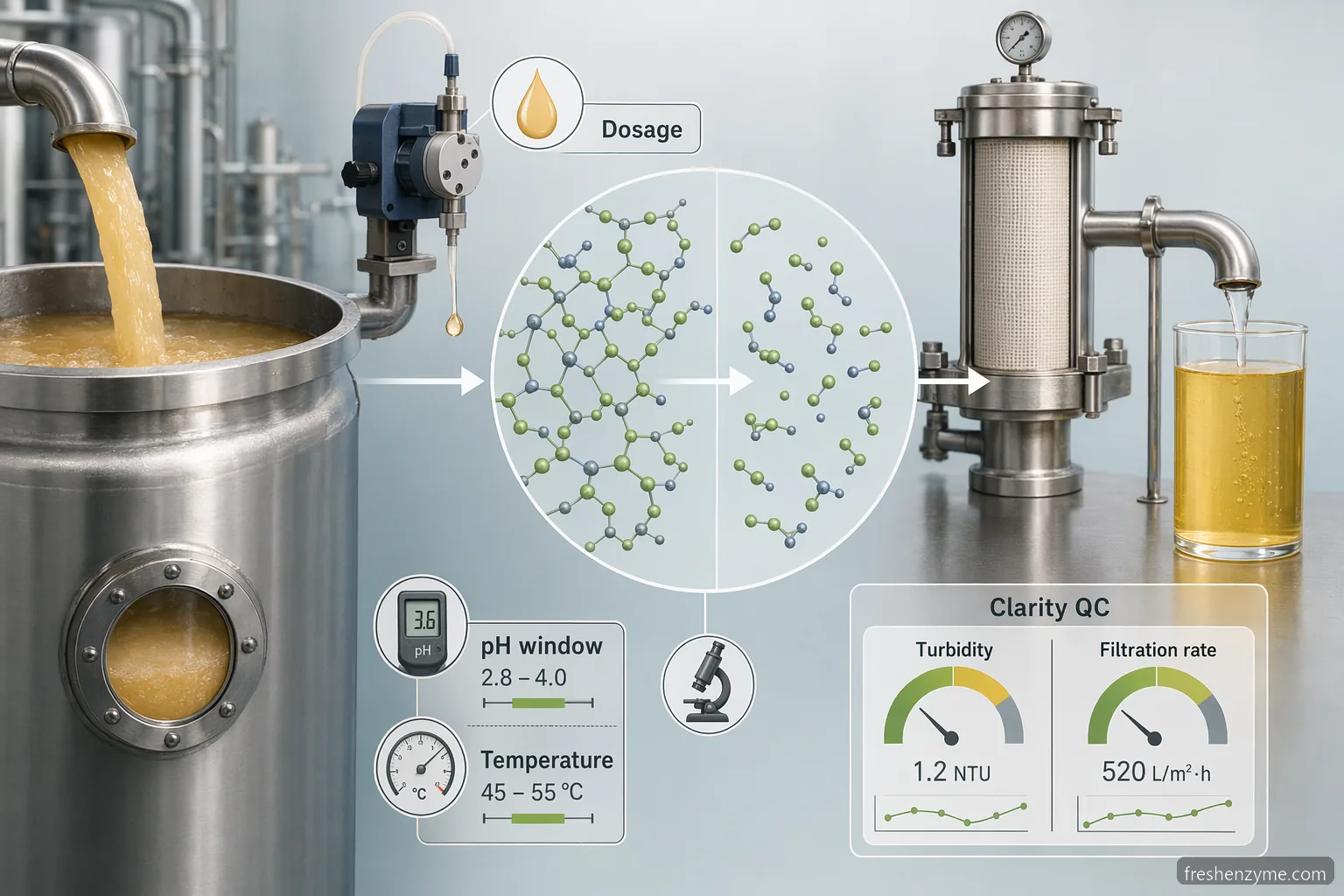
Why Juice Clarification Problems Happen
Cloudy juice, slow filtration, high lees volume, and inconsistent yield often come from soluble pectin, suspended pulp, starch residues, protein-polyphenol complexes, or insufficient enzyme contact. In apple, pear, berry, grape, tropical fruit, and blended juice lines, raw material maturity and storage conditions can change pectin structure significantly. A juice clarification enzyme for fruit processing is typically based on pectinase, often supported by hemicellulase, cellulase, or amylase depending on the fruit matrix. For B2B processors, the goal is not simply clearer juice; it is stable throughput, predictable filtration, lower rework, and controlled cost-in-use. Troubleshooting should begin with process mapping: crush or mash conditions, depectinization tank residence time, pH, temperature, mixing, enzyme addition point, and downstream separation equipment. Industrial fruit enzyme juice clarification works best when these variables are controlled rather than adjusted only after haze appears.
Confirm whether the issue is pectin haze, starch haze, pulp suspension, or microbial spoilage. • Run a pectin test and turbidity check before changing enzyme dosage. • Review fruit variety, ripeness, storage time, and pressing conditions.
Recommended pH and Temperature Windows
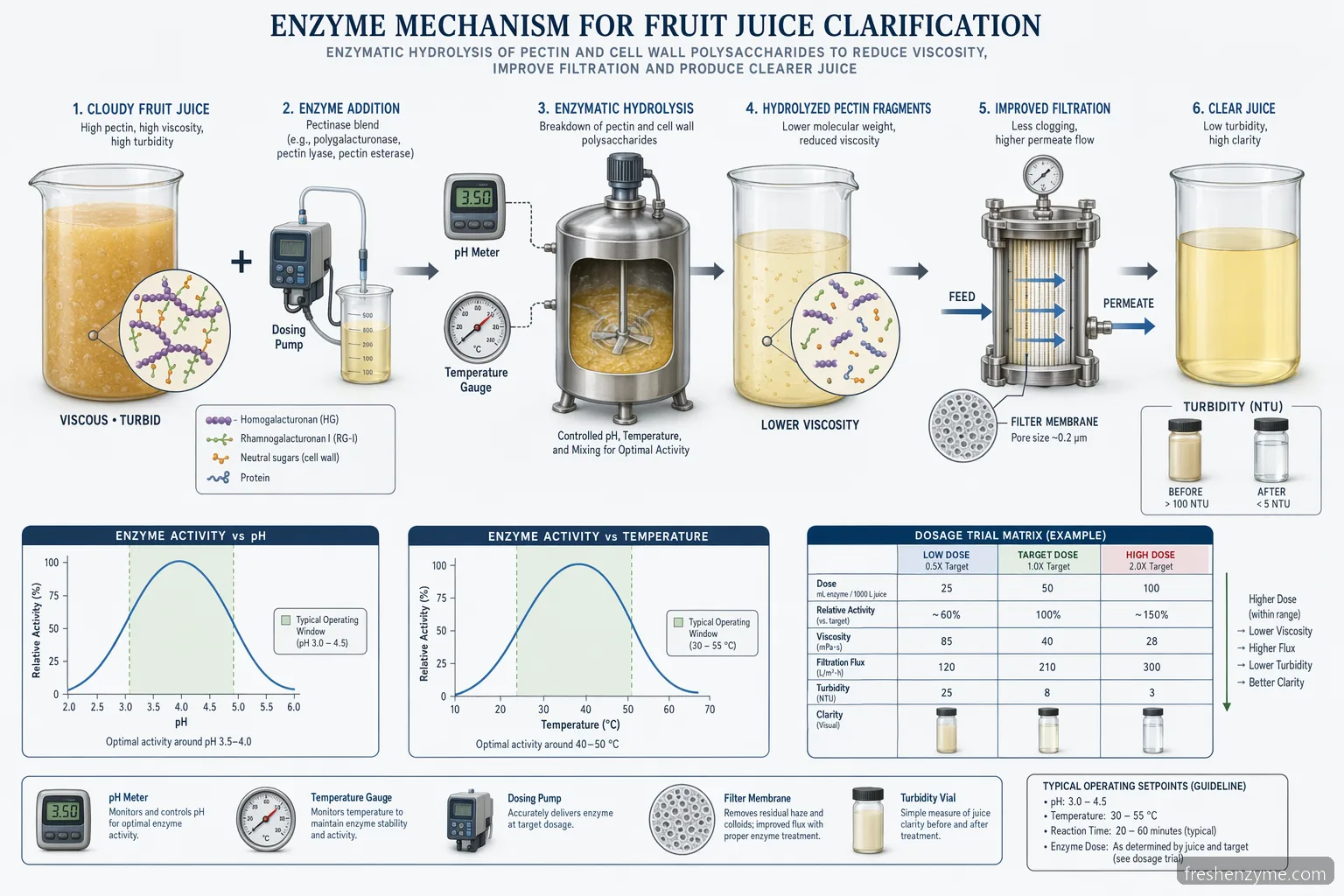
Most pectinase juice clarification systems perform well in the natural acidity of fruit juices, commonly around pH 3.0 to 5.0, though the optimum range depends on enzyme formulation and fruit type. Many industrial juice clarification enzyme products are used between 40°C and 55°C to accelerate pectin breakdown, while cooler processes may require longer residence time or higher dosage. Avoid assuming that higher temperature always improves performance; excessive heat can reduce enzyme activity or alter juice aroma and color. For wine and grape processing, lower temperatures may be selected to protect sensory quality, so contact time becomes more important. Always compare the supplier TDS with the plant’s actual pH and temperature profile. If clarification is inconsistent, verify tank temperature uniformity, mixing, and hold time before increasing enzyme input.
Typical pH evaluation range: 3.0-5.0 for many fruit juices. • Common temperature screening range: 40-55°C where product and process allow. • Cooler wine or premium juice processes may need extended contact time.
Dosage Strategy for Plant Trials
A practical dosage band for juice clarification enzyme screening is often 20 to 200 ppm, or the supplier’s recommended range based on enzyme activity units and juice composition. High-pectin fruits, concentrated mash, low-temperature processing, or short residence time may require the upper end of a trial range. Lower-pectin juices or longer holding times may need less. Because commercial products differ in activity, do not compare dosage only by weight; compare performance, cost-in-use, and declared activity where available. A good pilot validation uses untreated control, low dose, target dose, and high dose samples under the same pH, temperature, and contact time. Track clarity and filterability over time rather than relying on a single visual check. This prevents under-dosing, over-dosing, and unnecessary enzyme spend.
Start with supplier TDS dosage, then bracket lower and higher trial points. • Use identical mixing, time, temperature, and sample volume for each trial. • Calculate enzyme cost per metric ton or per 1,000 liters of juice.
QC Checks That Confirm Clarification Performance
For troubleshooting industrial juice clarification enzyme juice clarification, QC should connect laboratory results with production economics. Turbidity in NTU, viscosity, filterability index, sediment volume, pectin test results, °Brix, pH, color, and yield are useful checkpoints. In plants using membrane filtration, monitor flux rate, transmembrane pressure, cleaning frequency, and fouling indicators. In wine or grape juice clarification, also evaluate aroma and color retention because aggressive processing can affect sensory targets. The best fruit enzyme for juice clarification should reduce pectin-related haze without causing excessive breakdown of desirable body or mouthfeel. Take samples before enzyme addition, after contact time, after separation, and after final filtration. Trending these data by fruit lot and enzyme batch helps purchasing and technical teams make defensible decisions.
Measure NTU instead of relying only on visual clarity. • Use pectin and starch checks where haze source is uncertain. • Track filter throughput, lees volume, and yield recovery.
Supplier Qualification and Cost-in-Use
Selecting a juice clarification enzyme supplier for fruit processing should include more than unit price. Request a current COA for batch-specific quality data, a TDS for application guidance, an SDS for handling and storage, and documentation of traceability. Confirm enzyme activity declaration, recommended storage conditions, shelf life, packaging size, allergen or processing aid information where relevant, and regulatory suitability for the destination market. Ask for pilot support, troubleshooting guidance, and samples for validation on your own juice, wine, or fruit processing line. Cost-in-use should include dosage, clarification time, filtration speed, yield improvement, reduced rework, downtime, and waste handling. A reliable fruit enzyme supplier for juice clarification will help define trial protocols and acceptance criteria instead of promising one universal dosage.
Request COA, TDS, SDS, batch number, and storage guidance. • Evaluate technical response time and pilot-scale support. • Compare cost-in-use, not only price per kilogram.
Technical Buying Checklist
Buyer Questions
A common pilot screening band is 20-200 ppm, but the correct dosage depends on enzyme activity, pectin level, fruit type, pH, temperature, and contact time. Start with the supplier TDS recommendation, then run low, target, and high-dose trials against an untreated control. Compare NTU, filterability, sediment, yield, and cost-in-use before approving plant-scale dosage.
Persistent haze may come from under-dosing, low temperature, short residence time, poor mixing, or a haze source other than pectin, such as starch, protein-polyphenol complexes, suspended pulp, or microbial instability. Confirm with pectin and starch checks, measure turbidity, and review the process conditions against the enzyme TDS. Do not increase dosage until the root cause is identified.
Some pectinase-based products are suitable for both juice clarification and wine processing, but suitability depends on formulation, dosage, sensory goals, processing temperature, and local regulatory requirements. Wine applications may use lower temperatures and longer contact times to protect aroma and color. Request the TDS, SDS, COA, and application guidance before using one enzyme across multiple production lines.
Compare performance in your own juice, not only price per kilogram. Ask each supplier for COA, TDS, SDS, batch traceability, storage guidance, and technical support. Run side-by-side trials at equivalent process conditions and measure NTU reduction, filtration rate, yield, contact time, sensory impact, and enzyme cost per 1,000 liters or per metric ton of processed fruit.
The most important variables are pH, temperature, dosage, contact time, mixing, and the pectin load of the fruit. Many fruit juices fall near pH 3.0-5.0, while many clarification trials are screened around 40-55°C where product quality allows. Always confirm the actual operating window using the supplier TDS and pilot validation on your own juice.
Related Search Themes
industrial juice clarification enzyme fruit processing, juice clarification enzyme supplier for fruit processing, juice clarification enzyme for fruit processing, industrial juice clarification enzyme wine, industrial juice clarification enzyme juice clarification, fruit enzyme supplier for juice clarification
Juice Clarification Enzymes for Research & Industry
Need Juice Clarification Enzymes for your lab or production process?
ISO 9001 certified · Food-grade & research-grade · Ships to 80+ countries
Frequently Asked Questions
What dosage should we start with for industrial fruit enzyme juice clarification?
A common pilot screening band is 20-200 ppm, but the correct dosage depends on enzyme activity, pectin level, fruit type, pH, temperature, and contact time. Start with the supplier TDS recommendation, then run low, target, and high-dose trials against an untreated control. Compare NTU, filterability, sediment, yield, and cost-in-use before approving plant-scale dosage.
Why is our juice still cloudy after adding pectinase juice enzyme?
Persistent haze may come from under-dosing, low temperature, short residence time, poor mixing, or a haze source other than pectin, such as starch, protein-polyphenol complexes, suspended pulp, or microbial instability. Confirm with pectin and starch checks, measure turbidity, and review the process conditions against the enzyme TDS. Do not increase dosage until the root cause is identified.
Can the same juice clarification enzyme be used for wine?
Some pectinase-based products are suitable for both juice clarification and wine processing, but suitability depends on formulation, dosage, sensory goals, processing temperature, and local regulatory requirements. Wine applications may use lower temperatures and longer contact times to protect aroma and color. Request the TDS, SDS, COA, and application guidance before using one enzyme across multiple production lines.
How do we compare two juice clarification enzyme suppliers?
Compare performance in your own juice, not only price per kilogram. Ask each supplier for COA, TDS, SDS, batch traceability, storage guidance, and technical support. Run side-by-side trials at equivalent process conditions and measure NTU reduction, filtration rate, yield, contact time, sensory impact, and enzyme cost per 1,000 liters or per metric ton of processed fruit.
What are the most important process conditions for fruit enzyme clarification?
The most important variables are pH, temperature, dosage, contact time, mixing, and the pectin load of the fruit. Many fruit juices fall near pH 3.0-5.0, while many clarification trials are screened around 40-55°C where product quality allows. Always confirm the actual operating window using the supplier TDS and pilot validation on your own juice.
Related: Clearer Fruit Juices with Faster Separation
Turn This Guide Into a Supplier Brief Request a juice clarification enzyme sample, TDS, SDS, COA, and pilot trial support for your fruit processing line. See our application page for Clearer Fruit Juices with Faster Separation at /applications/fruit-juice-clarification/ for specs, MOQ, and a free 50 g sample.
Contact Us to Contribute