Juice Clarification Enzyme Supplier for Juice Clarification
Compare juice clarification enzymes for juice, wine, and fruit processing with pH, temperature, dosage, QC, COA/TDS/SDS, pilot, and cost-in-use checks.
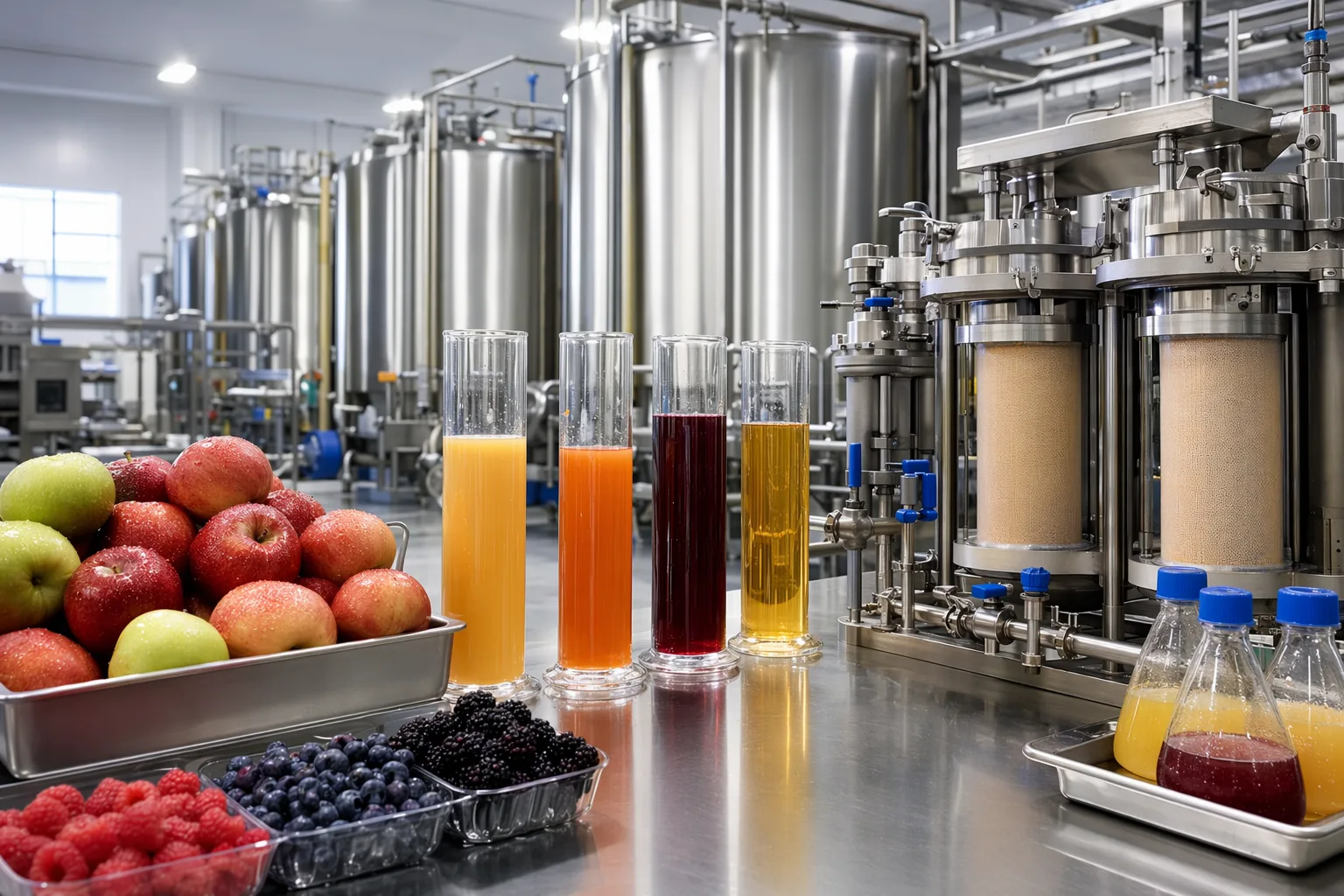
Compare industrial juice clarification enzymes with a practical specification checklist for B2B juice, wine, and fruit processing buyers.
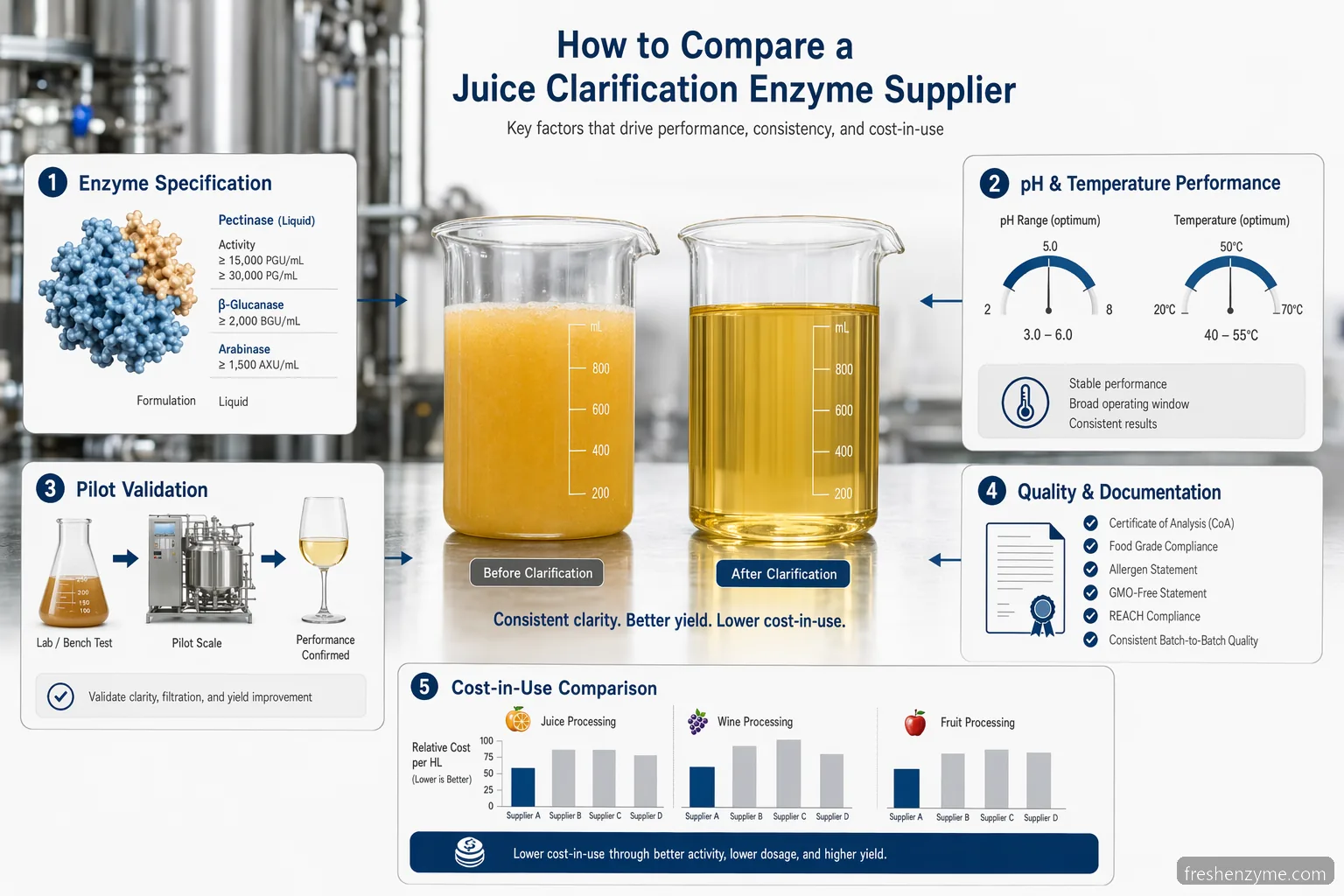
How to Compare Juice Clarification Enzyme Suppliers
A reliable juice clarification enzyme supplier for juice clarification should help you compare products by performance in your process, not only by quoted price per kilogram. Industrial buyers usually need pectinase-based blends that break down soluble pectin, reduce viscosity, release bound juice, and improve settling or filtration. The right fruit enzyme supplier for juice clarification will ask about fruit type, mash or pressed juice treatment, Brix, pH, temperature, residence time, pasteurization stage, and filtration equipment. For apple, berry, tropical fruit, and grape systems, the enzyme profile may need different pectin methylesterase, polygalacturonase, pectin lyase, cellulase, or hemicellulase balance. Supplier comparison should include technical fit, documentation, lot consistency, and realistic pilot validation. A strong supplier can explain expected benefits, limitations, and handling requirements without making unverifiable claims.
Define your target: lower turbidity, faster filtration, higher yield, or improved concentrate handling. • Compare activity units and recommended dosage on an equal process basis. • Ask whether the product is designed for juice, wine, fruit puree, or mixed applications.
Core Specification Checklist for Juice Clarification
When evaluating a juice clarification enzyme for juice clarification, create a checklist that links the enzyme specification to your plant conditions. Typical pectinase juice applications operate around pH 3.0 to 5.0, depending on the fruit, with temperatures often between 35°C and 55°C for hot mash or juice treatment. Some processes use lower temperatures for aroma protection or wine processing, so activity at 10°C to 25°C may also matter. Common dosage bands can range from 20 to 200 g per metric ton of fruit or juice, but dosage must be confirmed by activity, raw material, pectin load, and contact time. Your supplier should provide a Technical Data Sheet with recommended use conditions, a Certificate of Analysis for each lot, and a Safety Data Sheet covering handling, storage, and exposure controls.
Check pH activity curve and thermal stability. • Confirm liquid or powder format and dilution procedure. • Verify storage temperature, shelf life, and packaging size. • Review carrier, preservative, and allergen statements when relevant.
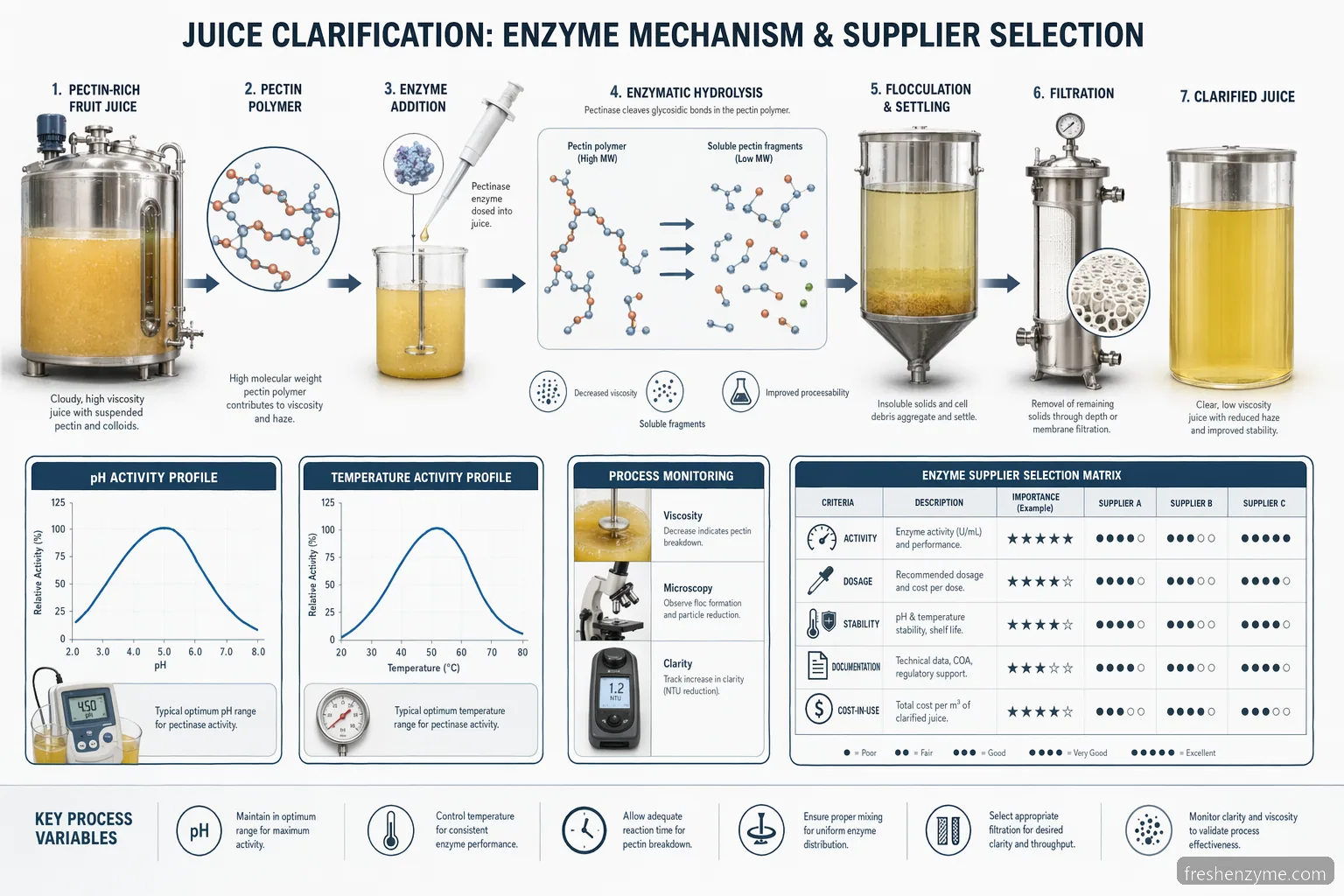
Pilot Validation Before Bulk Purchase
Comparison intent buyers should avoid selecting a juice processing enzyme only from a brochure. A small pilot trial can show whether a pectinase juice supplier for juice clarification is suitable for your raw material, season, and equipment. Set up a control and at least two enzyme dosage levels under realistic pH, temperature, mixing, and contact time. Measure turbidity by NTU, viscosity, filtration rate, press yield, sediment volume, Brix recovery, and clarity after fining or filtration. For wine, monitor juice or must clarification while protecting aroma and color targets. For fruit processing, track puree breakdown, pressability, and downstream filter loading. A good supplier will help interpret results and refine dosage so the final recommendation is based on cost-in-use and measurable production value.
Run trials on current-season raw material. • Keep enzyme contact time and temperature consistent. • Compare treated samples against an untreated control. • Check sensory and color impact before scale-up.
Quality Documents and Supplier Qualification
A qualified juice clarification enzyme supplier for fruit processing should support purchasing, quality, and production teams with complete documentation. Request the COA, TDS, SDS, lot number, manufacturing date, expiry date, and storage guidance before approval. The COA should list relevant physical or activity parameters and microbiological indicators where applicable. The TDS should state intended industrial food-processing use, recommended dosage range, pH and temperature guidance, inactivation suggestions, and compatibility notes. The SDS should describe safe handling, dust or aerosol precautions, spill response, and personal protective equipment. Supplier qualification should also review lead time, minimum order quantity, packaging integrity, change notification practice, complaint handling, and ability to supply consistent lots during seasonal production peaks.
Do not rely on undocumented activity claims. • Confirm batch traceability from sample to commercial order. • Ask how specification changes are communicated. • Evaluate technical response time during production trials.
Cost-in-Use for Juice, Wine, and Fruit Processing
The lowest unit price does not always deliver the lowest production cost. Compare a juice clarification enzyme supplier for wine, juice, and fruit processing by calculating cost-in-use per metric ton, per liter of finished juice, or per batch. Include enzyme dosage, yield improvement, filtration throughput, reduced filter aid consumption, lower tank hold time, labor savings, and product losses during clarification. A more concentrated product may cost more per kilogram but require less dosage and reduce shipping or storage burden. For wine, the value may come from cleaner racking and more predictable clarification. For fruit processing, value may come from improved press efficiency and easier downstream evaporation or concentration. The best supplier comparison combines technical performance, documentation, logistics, and total operating impact.
Calculate cost per treated ton, not only price per drum. • Include filter capacity and downtime in the comparison. • Confirm scale-up assumptions after pilot testing. • Review seasonal supply reliability before contracting.
Technical Buying Checklist
Buyer Questions
Ask for the COA, TDS, SDS, recommended pH and temperature range, dosage guidance, activity basis, storage conditions, shelf life, and lot traceability. Also describe your fruit type, Brix, process temperature, contact time, and filtration equipment. A qualified juice clarification enzyme supplier for juice clarification should recommend a pilot protocol before you commit to bulk purchase.
No. Pectin content, pectin structure, pulp level, acidity, and processing goal vary by apple, grape, berry, tropical fruit, and citrus systems. A pectinase juice supplier for juice clarification may offer different enzyme profiles for pressed juice, mash treatment, wine must, or fruit processing. Pilot testing confirms whether the selected product improves clarity, filtration, and yield under your exact conditions.
A common starting band is about 20-200 g per metric ton of fruit or juice, but the correct dosage depends on enzyme activity, fruit variety, pH, temperature, contact time, and desired clarity. Use the supplier TDS as a starting point, then run a controlled pilot with at least two dosage levels and an untreated control.
Compare cost-in-use rather than price per kilogram. Calculate enzyme cost per treated ton or finished liter, then include yield gain, filtration rate, filter aid use, tank time, labor, waste, and product loss. A higher-priced juice processing enzyme can be more economical if it works at lower dosage or improves throughput in your plant.
Some products are suitable for both juice and wine, but the selection should consider temperature, pH, aroma protection, color extraction, and clarification target. A juice clarification enzyme supplier for wine should provide low-temperature performance data when needed. Always confirm compatibility with your must, yeast plan, fining approach, and downstream filtration through bench or pilot trials.
Related Search Themes
juice clarification enzyme supplier for wine, juice clarification enzyme supplier for fruit processing, fruit enzyme supplier for juice clarification, juice clarification enzyme, pectinase juice supplier for juice clarification, juice clarification enzyme for wine
Juice Clarification Enzymes for Research & Industry
Need Juice Clarification Enzymes for your lab or production process?
ISO 9001 certified · Food-grade & research-grade · Ships to 80+ countries
Frequently Asked Questions
What should I ask a juice clarification enzyme supplier before ordering?
Ask for the COA, TDS, SDS, recommended pH and temperature range, dosage guidance, activity basis, storage conditions, shelf life, and lot traceability. Also describe your fruit type, Brix, process temperature, contact time, and filtration equipment. A qualified juice clarification enzyme supplier for juice clarification should recommend a pilot protocol before you commit to bulk purchase.
Is a pectinase juice enzyme the same for every fruit?
No. Pectin content, pectin structure, pulp level, acidity, and processing goal vary by apple, grape, berry, tropical fruit, and citrus systems. A pectinase juice supplier for juice clarification may offer different enzyme profiles for pressed juice, mash treatment, wine must, or fruit processing. Pilot testing confirms whether the selected product improves clarity, filtration, and yield under your exact conditions.
What dosage should I use for a juice clarification enzyme?
A common starting band is about 20-200 g per metric ton of fruit or juice, but the correct dosage depends on enzyme activity, fruit variety, pH, temperature, contact time, and desired clarity. Use the supplier TDS as a starting point, then run a controlled pilot with at least two dosage levels and an untreated control.
How do I compare enzyme cost between suppliers?
Compare cost-in-use rather than price per kilogram. Calculate enzyme cost per treated ton or finished liter, then include yield gain, filtration rate, filter aid use, tank time, labor, waste, and product loss. A higher-priced juice processing enzyme can be more economical if it works at lower dosage or improves throughput in your plant.
Can the same enzyme be used for juice clarification and wine?
Some products are suitable for both juice and wine, but the selection should consider temperature, pH, aroma protection, color extraction, and clarification target. A juice clarification enzyme supplier for wine should provide low-temperature performance data when needed. Always confirm compatibility with your must, yeast plan, fining approach, and downstream filtration through bench or pilot trials.
Related: Clearer Fruit Juices with Faster Separation
Turn This Guide Into a Supplier Brief Request a COA, TDS, SDS, sample, and pilot dosage recommendation for your juice clarification process. See our application page for Clearer Fruit Juices with Faster Separation at /applications/fruit-juice-clarification/ for specs, MOQ, and a free 50 g sample.
Contact Us to Contribute